P25 2M Repeater
A VHF P25 Phase 1 repeater project built around a M/A-COM MASTR III, GPS-disciplined frequency reference, cavity filtering, and a dedicated 2 meter antenna system.
- VHF
- 2m
- P25 Phase 1
The KI7TRR 2 meter P25 repeater is located on Mica Peak in Spokane County, Washington. The site places the repeater on a high-elevation ridge near the southern end of the Selkirk Mountains, overlooking the Spokane Valley and Palouse region.
The repeater is built around a M/A-COM MASTR III station configured for P25 Phase 1 conventional operation. It transmits on 146.4750 MHz and receives on 147.4750 MHz, using a +1.0000 MHz input offset.
Operating Parameters
| Parameter | Value |
|---|---|
| Site | Mica Peak, Spokane County, Washington |
| Site elevation | 5,170 ft |
| Output frequency | 146.4750 MHz |
| Input offset | +1.0000 MHz |
| Input frequency | 147.4750 MHz |
| Mode | P25 Phase 1 conventional |
| NAC | 555 |
| Talkgroup | 200 |
System Hardware
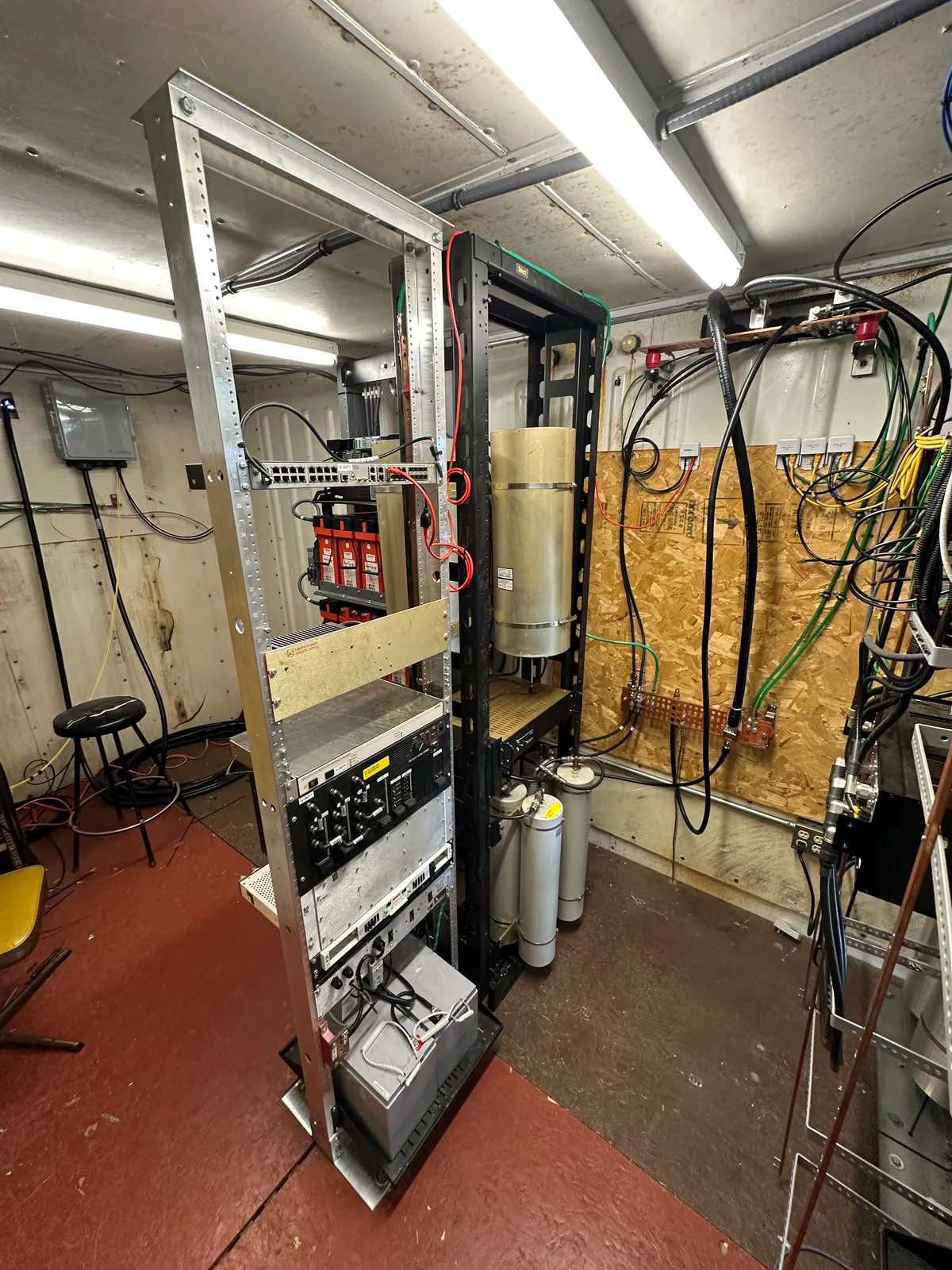
The RF platform is a M/A-COM MASTR III station using a 19D902839G2 T/R shelf and an EA101292V12 VHF PA. Frequency reference work is tied back to an Arbiter Systems 1083A GPS frequency standard, giving the station a stable reference point for alignment and drift checks.
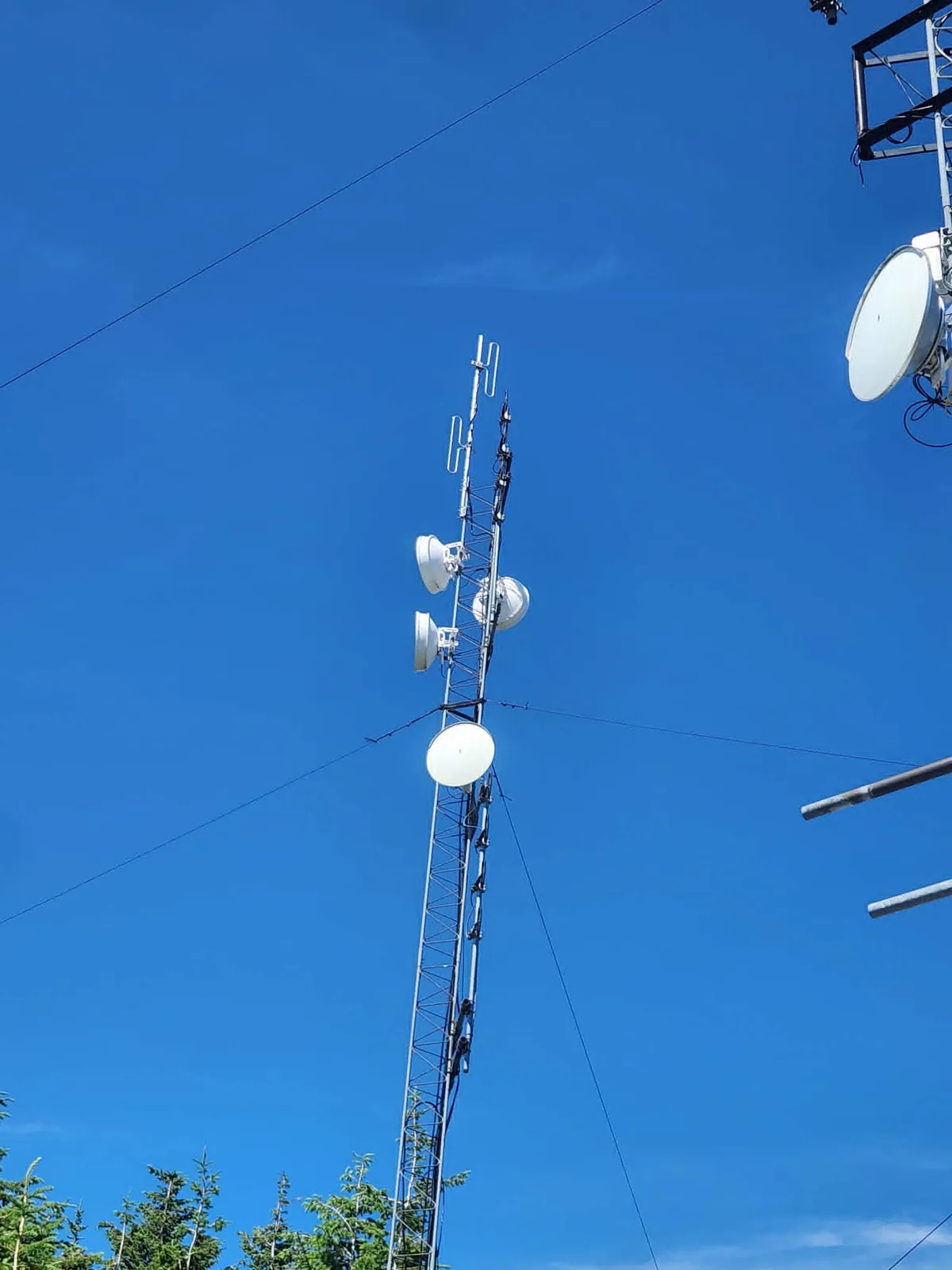
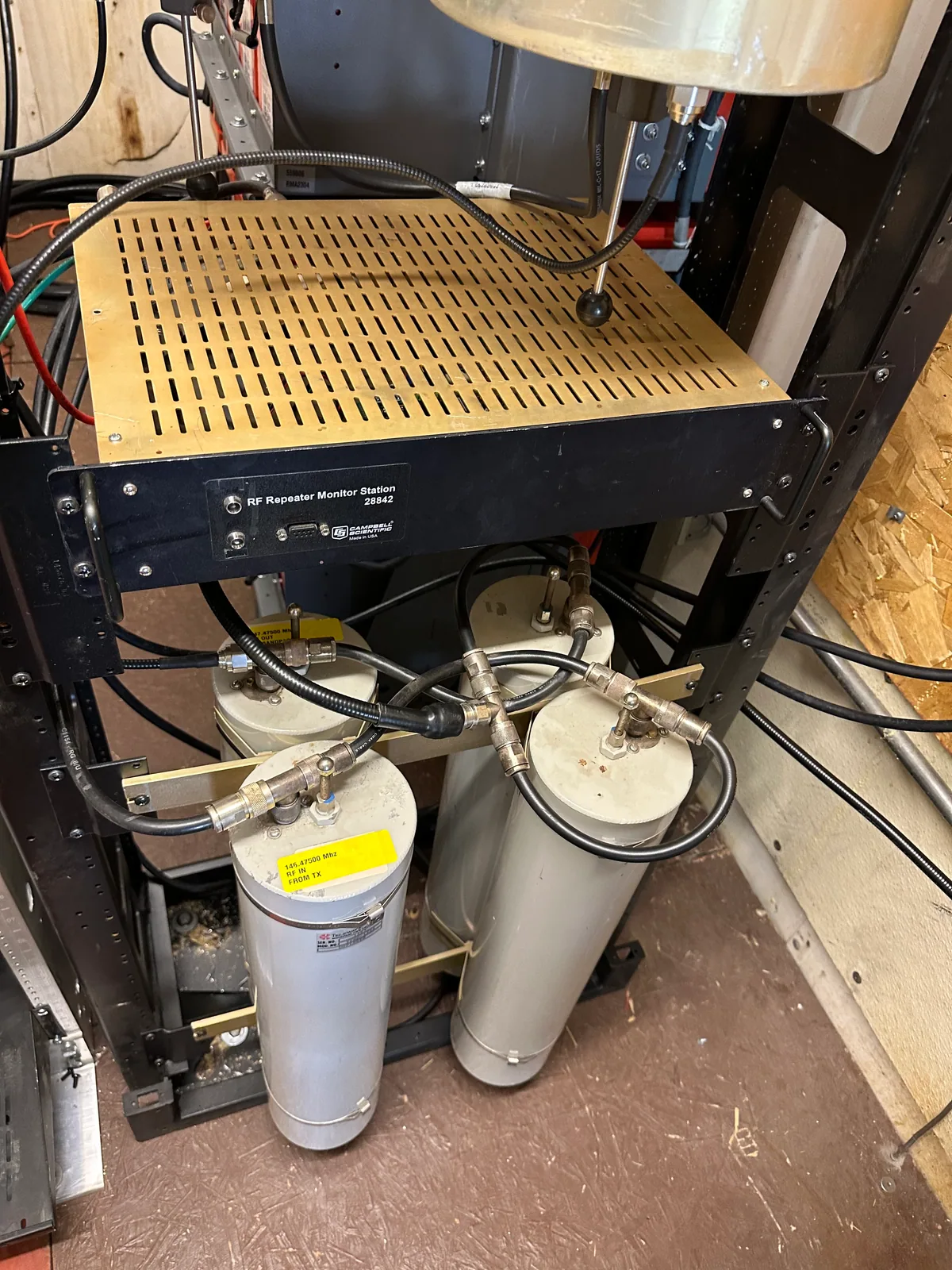
The antenna system uses a Sinclair Technologies SD222-SF3PASNM antenna. RF filtering is handled by a Telewave TPRD-1554 duplexer and a pair of Microwave Associates CP-150-101N 10 inch band-pass filters.
The DC power system is built around a M/A-COM PS103010V120 24/12 VDC power supply and charger with 120 V, 60 Hz input. Backup power comes from two 100 AH AGM batteries wired in a 24 V configuration. DC distribution is handled through an Amphenol Telect 240GT54 fuse panel that has been retasked for 12 V and 24 V distribution instead of A and B power feeds.
The RF monitor reuses the enclosure and Bird CPS hardware from a Campbell Scientific 28842 RF Repeater Monitor Station. The original PLC controller had been removed, so the monitor was rebuilt around a Raspberry Pi 4 to track transmitted and reflected power on the repeater.
Planned P25 Receiver Expansion
The long-term direction for the repeater may include moving beyond a single receiver at Mica Peak and experimenting with a P25 receive-selection system. This is still in the theory stage and has not been through a proof of concept.
The first unknown is whether the needed data can be extracted successfully from the M/A-COM MASTR III DSP controller. If that proves workable, remote VHF receivers could feed decoded P25 information and signal-quality data back to the repeater system.
Unlike a conventional analog voter, the concept would evaluate the P25 bitstream itself along with receiver metrics such as RSSI and bit error rate. The goal would be to select the cleanest usable data stream for each inbound transmission, then repeat that selected stream instead of simply choosing the loudest receiver audio.
A later expansion path may include a simulcast transmit/receive (T/R) site if coverage goals, site access, and frequency-coordination work support it. That phase would require matched timing, controlled RF and network paths, and careful overlap testing so subscriber radios hear one coherent P25 system instead of competing transmitters.
Future investigation would include DSP controller data access, remote receiver site selection, receiver alignment, link reliability, P25 stream handling, quality-metric comparison, reference timing, and drive testing with subscriber radios across the intended coverage area.
Installation Photos
Programming Notes
Subscriber radios use P25 conventional operation with NAC 555 and talkgroup 200. The primary channel is programmed with 146.4750 MHz receive and 147.4750 MHz transmit.
Acknowledgements
Big thanks to Jeff, N7JPR, for help with the project from the start. And to Ben, K7DMG, for his assistance on install day.